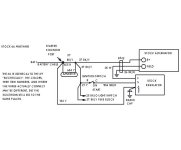
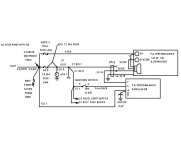
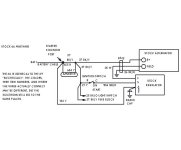
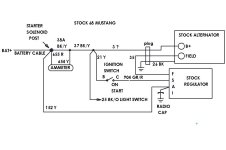
someone on another forum asked what was meant by note two, so...
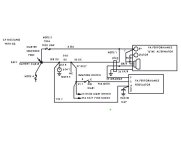
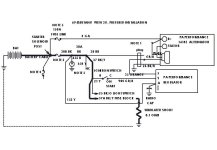
Its best to show what happens with pictures.
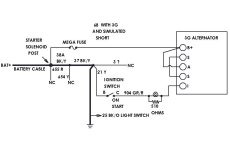
To explain this I need to shift into teaching mode- mind you I’m not a teacher, but I am an Electrical Engineer. First, what is a short circuit, or short? A short is when a circuit has less resistance than intended and is usually near or approaching zero ohms. Lets say that the wire leading to the fuse box gets frayed and connects (shorts) to the chassis.
We will estimate this short is 0.1 ohms, so using Ohms Law, I=E/R =12v/.1ohms = 120 amps. That's enough to melt the 12 ga. wire used to supply all the power to the car in the original harness.
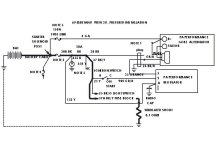
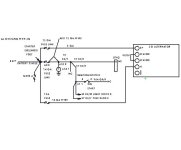
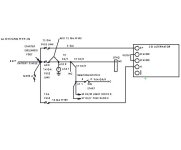
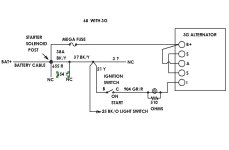
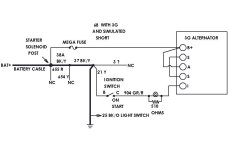
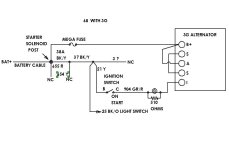
The manufacturers instructions say to install the alternator this way:
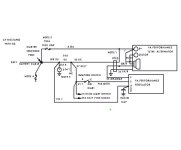
This is a guesstimate based on perceived wire lengths from the wire diagram. I won’t bore you with the calculations, but wires 38A and 38B will flow about 54 amps while 38 and the 4 ga. wire will flow about 66 amps.
The 150A fuse link will not open because the amps are too low, but all the 12 ga. wires 38, 38a, and 38B will become a fuse and melt. This occurs at about 38.3 amps in a high heat area like under the hood where wire resistance goes up.
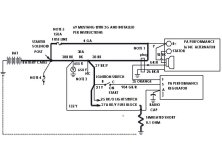
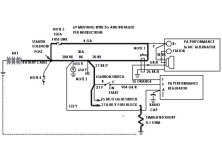
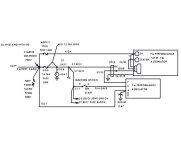
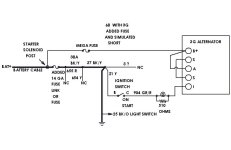
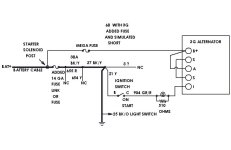
This is the preferred method of installation.
The wires are not connected at note 1 and a 14 ga. fuse link has been installed at note 2. Since the 14 ga. fuse link is smaller than the 12 ga. wires 38, 38A, and 38B, the fuse link will blow and the wire harness will be saved. I would rather be stranded by the side of the road than burn-up the car.